
Materials / grade-specific review
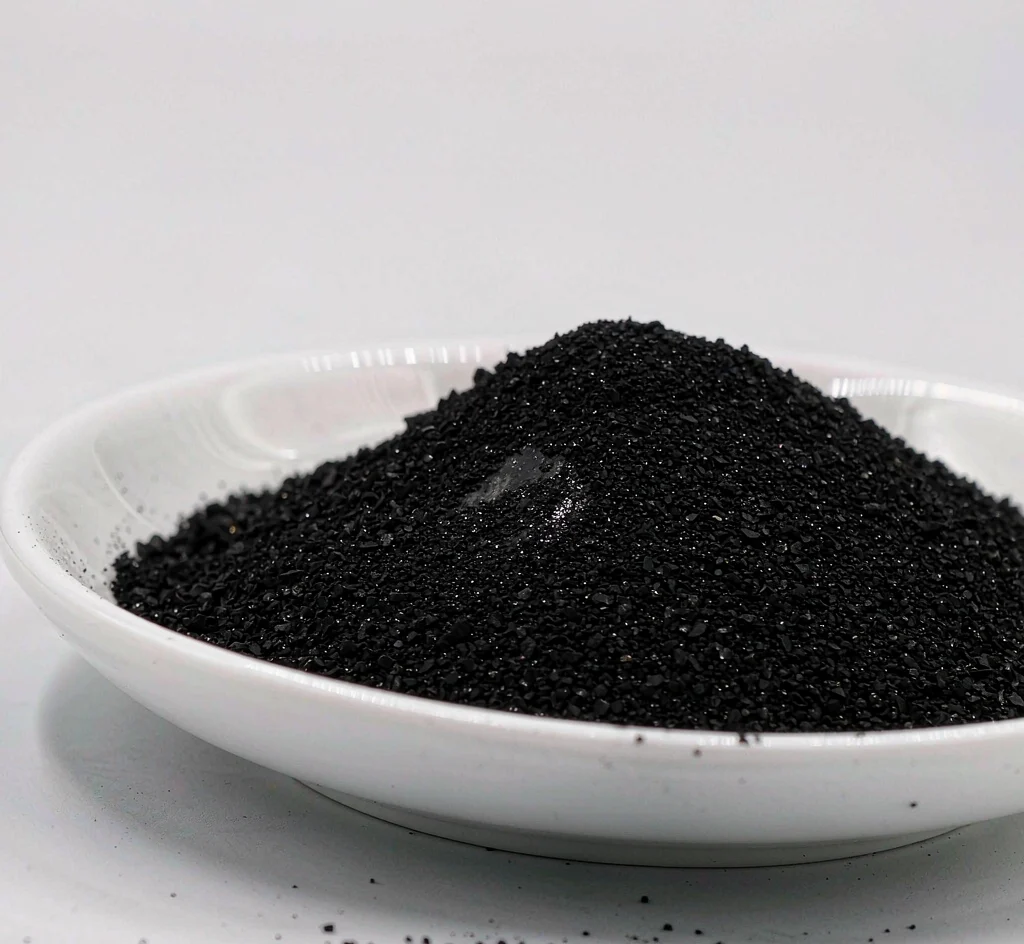
Artificial Graphite Anode Powder
Graphitised artificial anode material with high first-cycle efficiency and stable cycling, engineered for consistent slurry behaviour batch to batch.
APPLICATION & GRADE
Grade / designation: SZ-M1-AN01
Grade and specification to be confirmed
Discuss Material Requirements ↗Typical applications
Lithium-ion anode for power and consumer cells
Coin-cell half-cell evaluation
Blending base for silicon-carbon composites
Sodium-ion hard carbon reference
Grade & supply review
Reversible capacity and first-cycle efficiency target
Particle size, BET surface area and tap density
Carbon coating level, or pre-lithiation for silicon blends
Blend ratio and expansion data for SiOx / silicon grades
Representative image. Actual material appearance varies by grade and lot — request a current photograph or sample.
About this material
Artificial graphite is produced by graphitising petroleum coke or needle coke at temperatures above 2800 °C. The resulting material has a highly ordered layered structure, low surface area and a surface chemistry that forms a compact, stable SEI in the first cycles. Compared with natural graphite it offers better rate capability and more consistent batch-to-batch behaviour, at a higher cost per kilogram.
This grade is intended for negative electrode preparation in NMP-free water-based systems using SBR and CMC. Its particle size distribution is controlled to balance rate performance against slurry viscosity and coating quality — finer powders improve kinetics but raise binder demand and increase the risk of electrode cracking during drying.
Documentation, controls and care
Quality controls
- Certificate of analysis per batch
- Moisture by Karl Fischer
- Magnetic impurity screening
- Tap and pressed density verification
Handling & storage
- Store dry below 30 °C in sealed packaging.
- Avoid prolonged exposure to humid air — graphite adsorbs moisture readily.
- Vacuum dry at 80–100 °C before use in moisture-sensitive cells.
Grades on this page are references used to describe capability; they are not a fixed product list.
Specification values are typical windows compiled from public technical references and supplier
datasheets, and are provided for selection guidance only. The specification delivered against your
order is agreed in writing, and measured values are confirmed on the batch certificate of analysis.
Materials listed here may be hazardous; they must be handled by qualified personnel under applicable
regulations.
Material specifications
| Material | Graphitised artificial graphite |
|---|---|
| Reversible capacity | 340–365 mAh/g at 0.1C |
| First-cycle efficiency | 92–96% |
| Tap density | 0.9–1.1 g/cm³ |
| Pressed density | 1.5–1.8 g/cm³ |
| Specific surface area (BET) | 1.5–4.0 m²/g |
| Particle size | D50 10–16 μm |
| Cycle life | >1500 cycles to 80% retention |
| Moisture | ≤300 ppm |
| Ash content | ≤0.1% |
| Recommended binder | SBR 1.5–3% with CMC 1–2% |
| Electrode potential | ≈0.2 V vs Li/Li⁺ |
Grade & packaging options
High-rate and high-capacity variants
Carbon-coated grades for Si blending
Pre-dispersed slurry on request
Custom D50 windows
Supply boundaries
Reference grade, not a fixed catalogue item. Capacity, particle size, coating, purity and packaging are set to the specification your process needs — the delivered grade may differ from the values shown here.
Packaging & handling
Laboratory pack | 100 g / 500 g foil-lined pouch
Pilot pack | 1 kg / 5 kg sealed container
Production pack | 25 kg fibre drum, inner PE liner
Information for material review
Cell chemistry, format and voltage window
Target capacity, areal loading or formulation
Process route — NMP/PVDF, aqueous, or dry
Quantity per lot, packing and delivery schedule
Training in China
Training at our China facility is available for this product. Scope, schedule and language are agreed for each project.
Related products
LET’S REVIEW YOUR MATERIAL REQUIREMENTS
Discuss your material specification.
Share the intended use, required grade, quantity and supporting documents you need to review.
support@szotech.com