
Materials / grade-specific review
LiFePO4 Cathode Powder
Olivine-type LFP active material with a flat 3.2 V plateau, long cycle life and excellent thermal stability — the default choice for safety-first cells and storage projects.
APPLICATION & GRADE
Grade / designation: SZ-M1-CA01
Grade and specification to be confirmed
Discuss Material Requirements ↗Typical applications
Lithium-ion power and storage cells
Coin-cell half-cell evaluation against lithium
Pouch and cylindrical pilot builds
Sodium-ion reference benchmarking
Grade & supply review
Specific capacity window and voltage cut-off
Carbon coating level, or an Al2O3 / Li3PO4 surface coating
D50 and Dmax windows, including pre-milled fine grades
Dopant package (Al, Zr, B, Mg) and residual-lithium limit
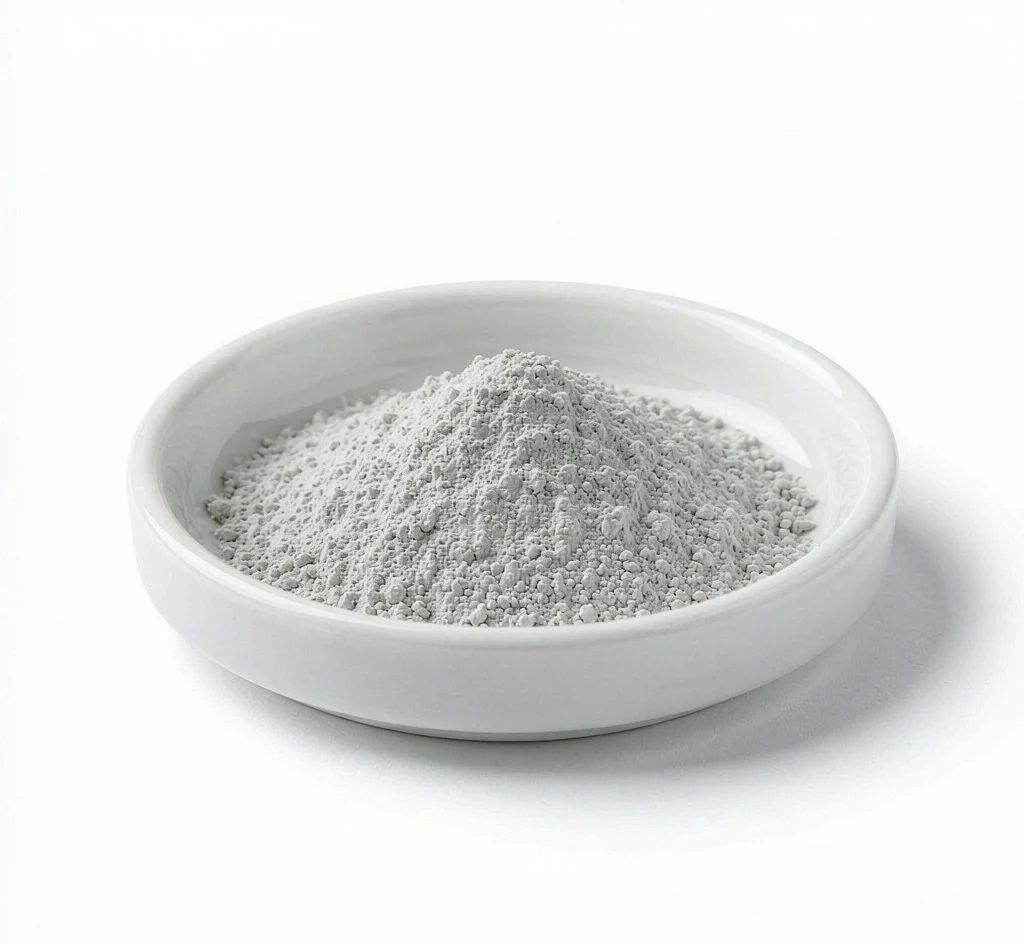
Representative image. Actual material appearance varies by grade and lot — request a current photograph or sample.
About this material
LiFePO4 (LFP) is an olivine-structured cathode material built around an abundant iron-phosphate framework. Its strong P–O bond stabilises the lattice at full charge, which is why LFP cells tolerate abuse, overcharge and high temperature far better than layered oxides. The trade-off is a lower average voltage — 3.2 V against 3.6–3.7 V for NCM — and a lower pressed density, so cell-level energy density is moderated by design rather than by material limitation.
This grade is supplied for electrode slurry preparation in coin-cell, pouch and cylindrical builds. Particle size and carbon coating are tuned for uniform dispersion in NMP/PVDF systems; the material also runs in water-based carboxymethyl cellulose routes where the process calls for it. Typical laboratory loading is 2–4 mAh/cm² of coated area.
Documentation, controls and care
Quality controls
- Batch-level certificate of analysis with every shipment
- Moisture by Karl Fischer, reported per lot
- Magnetic impurity screening
- Retained samples held for 12 months
Handling & storage
- Store in a dry environment below 30 °C, away from direct sunlight.
- Equilibrate to room temperature before opening sealed packaging to avoid condensation.
- Dry at 60–80 °C under vacuum before slurry preparation where the process requires it.
Grades on this page are references used to describe capability; they are not a fixed product list.
Specification values are typical windows compiled from public technical references and supplier
datasheets, and are provided for selection guidance only. The specification delivered against your
order is agreed in writing, and measured values are confirmed on the batch certificate of analysis.
Materials listed here may be hazardous; they must be handled by qualified personnel under applicable
regulations.
Material specifications
| Chemistry | LiFePO4, olivine structure |
|---|---|
| Specific capacity | 140–155 mAh/g at 0.2C |
| First-cycle efficiency | ≥95% |
| Nominal voltage | 3.2 V |
| Tap density | 1.0–1.4 g/cm³ |
| Pressed density | 2.1–2.5 g/cm³ |
| Specific surface area (BET) | 12–20 m²/g |
| Particle size | D50 0.8–1.5 μm, Dmax ≤30 μm |
| Cycle life | >2000 cycles to 80% retention |
| Moisture | ≤500 ppm |
| Carbon coating | 1.0–1.8 wt% |
| Operating temperature | −20 to 55 °C |
Grade & packaging options
Carbon-coated and uncoated variants
Pre-milled grades for thin coatings
Water-based slurry compatibility data
Custom D50 windows on request
Supply boundaries
Reference grade, not a fixed catalogue item. Capacity, particle size, coating, purity and packaging are set to the specification your process needs — the delivered grade may differ from the values shown here.
Packaging & handling
Laboratory pack | 100 g / 500 g foil-lined pouch
Pilot pack | 1 kg / 5 kg sealed container
Production pack | 25 kg fibre drum, inner PE liner
Information for material review
Cell chemistry, format and voltage window
Target capacity, areal loading or formulation
Process route — NMP/PVDF, aqueous, or dry
Quantity per lot, packing and delivery schedule
Training in China
Training at our China facility is available for this product. Scope, schedule and language are agreed for each project.
Related products

LET’S REVIEW YOUR MATERIAL REQUIREMENTS
Discuss your material specification.
Share the intended use, required grade, quantity and supporting documents you need to review.
support@szotech.com