
Materials / grade-specific review
NCM811 Cathode Powder
High-nickel layered oxide for maximum cell energy — 195–210 mAh/g, with the dry-room discipline that high-nickel chemistry demands.
APPLICATION & GRADE
Grade / designation: SZ-M1-CA03
Grade and specification to be confirmed
Discuss Material Requirements ↗Typical applications
High-energy consumer and automotive cells
High-voltage 4.3 V cycling studies
Cathode for solid-state cell research
Benchmark against LFP and NCM523
Grade & supply review
Specific capacity window and voltage cut-off
Carbon coating level, or an Al2O3 / Li3PO4 surface coating
D50 and Dmax windows, including pre-milled fine grades
Dopant package (Al, Zr, B, Mg) and residual-lithium limit
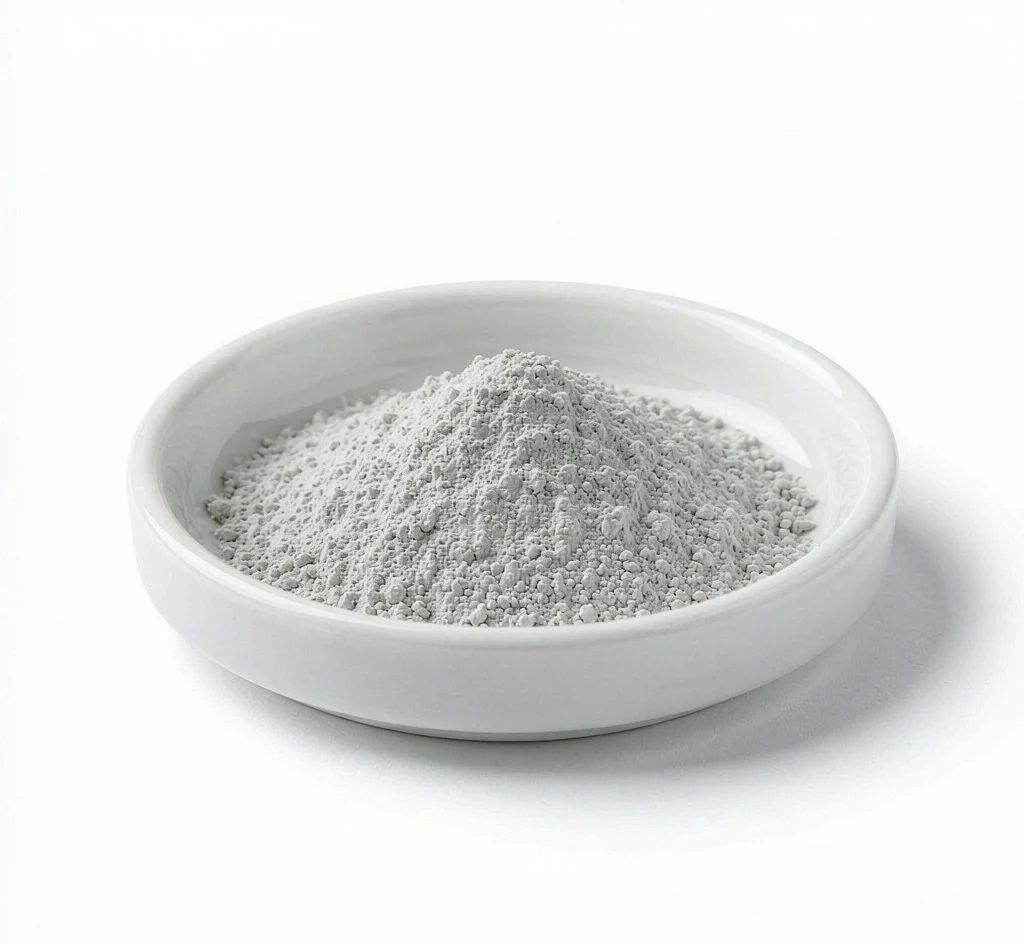
Representative image. Actual material appearance varies by grade and lot — request a current photograph or sample.
About this material
Raising nickel to 80% and cutting cobalt to 10% pushes capacity to 195–210 mAh/g, the highest of any commercial layered oxide short of lithium-rich systems. The price is a more reactive surface: residual lithium rises, cation mixing increases, and the material must be processed below 1% relative humidity to stay stable.
Use it where energy density is the binding constraint — high-voltage consumer cells and long-range automotive formats. Expect to need a coating (Al2O3 or Li3PO4) and an electrolyte additive package, and to keep the electrode density below about 3.6 g/cm³ to preserve rate capability.
Documentation, controls and care
Quality controls
- Certificate of analysis per batch
- Moisture by Karl Fischer, reported per lot
- Trace metal screening
- Retained samples held for 12 months
Handling & storage
- Store under dry air or argon below 25 °C; open only in a dry room at ≤1% RH.
- Dry at 80–100 °C under vacuum before use — do not exceed 120 °C.
- Use within 8 hours of opening; reseal under vacuum if a partial pack remains.
Grades on this page are references used to describe capability; they are not a fixed product list.
Specification values are typical windows compiled from public technical references and supplier
datasheets, and are provided for selection guidance only. The specification delivered against your
order is agreed in writing, and measured values are confirmed on the batch certificate of analysis.
Materials listed here may be hazardous; they must be handled by qualified personnel under applicable
regulations.
Material specifications
| Chemistry | LiNi0.8Co0.1Mn0.1O2, layered oxide |
|---|---|
| Specific capacity | 195–210 mAh/g at 0.2C, 2.75–4.3 V |
| First-cycle efficiency | 88–91% |
| Nominal voltage | 3.7 V |
| Tap density | 1.9–2.2 g/cm³ |
| Pressed density | 3.4–3.6 g/cm³ |
| Specific surface area (BET) | 0.2–0.5 m²/g |
| Particle size | D50 10–13 μm, Dmax ≤45 μm |
| Residual lithium | ≤0.05 wt% |
| Moisture | ≤200 ppm |
| Processing humidity | ≤1% RH dry room |
| Cycle life | >800 cycles to 80% with coating |
Grade & packaging options
Custom particle size or purity windows
Pilot and production quantities
Technical review call with our materials team
Supply boundaries
Reference grade, not a fixed catalogue item. Capacity, particle size, coating, purity and packaging are set to the specification your process needs — the delivered grade may differ from the values shown here.
Packaging & handling
Laboratory pack | 100 g / 500 g foil-lined pouch
Pilot pack | 1 kg / 5 kg sealed container
Production pack | 25 kg fibre drum, inner PE liner
Information for material review
Cell chemistry, format and voltage window
Target capacity, areal loading or formulation
Process route — NMP/PVDF, aqueous, or dry
Quantity per lot, packing and delivery schedule
Training in China
Training at our China facility is available for this product. Scope, schedule and language are agreed for each project.
Related products
LET’S REVIEW YOUR MATERIAL REQUIREMENTS
Discuss your material specification.
Share the intended use, required grade, quantity and supporting documents you need to review.
support@szotech.com